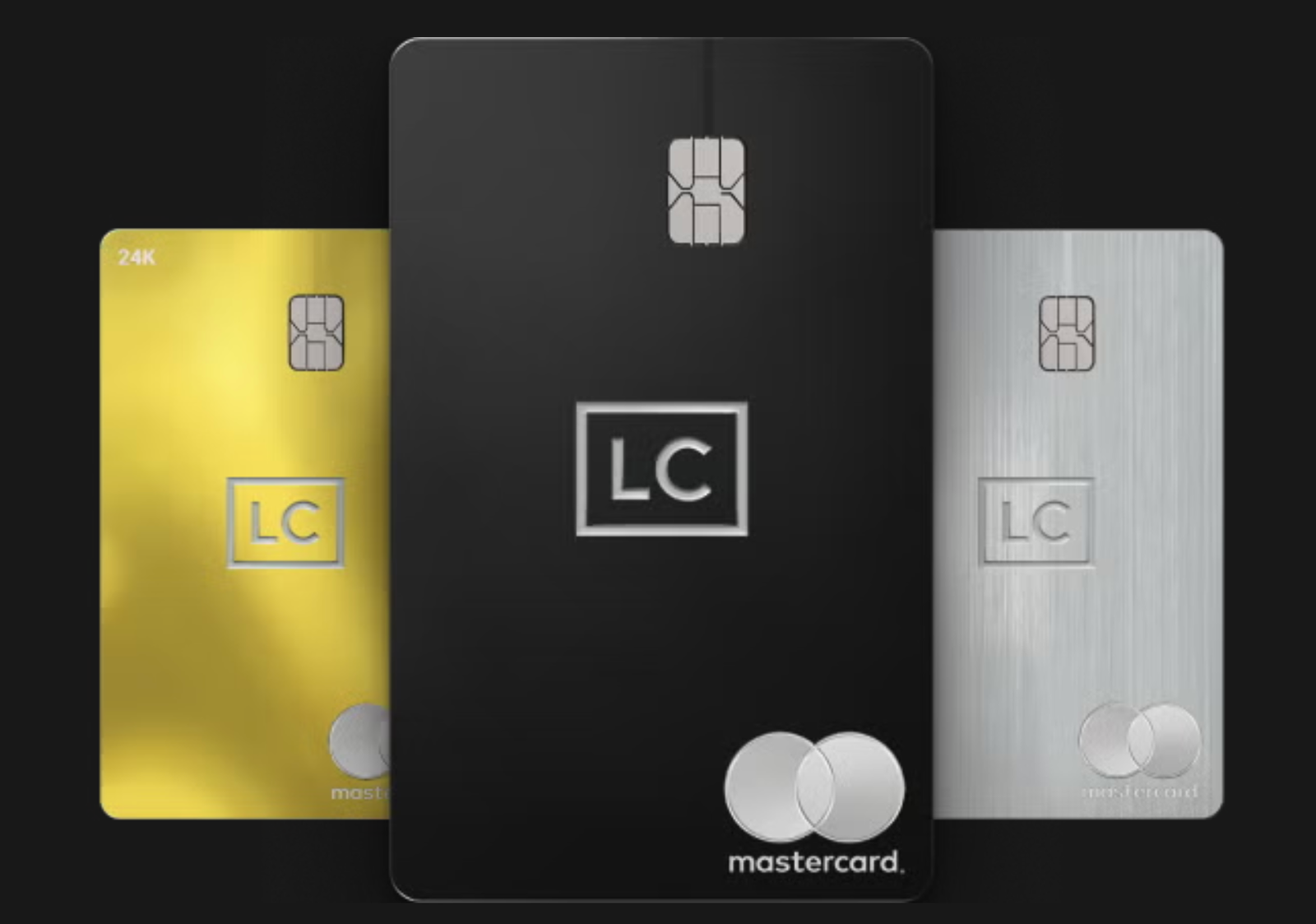
Luxury Card — issued by Barclays under license from Mastercard — offers three premium metal credit cards that are, without question, some of the most visually impressive cards available. The Titanium is brushed stainless steel. The Black is black PVD-coated metal. The Gold is plated in 24-karat gold. Each card weighs 22 grams, and every one of them will get a reaction when you put it on a restaurant table.
What you need to decide is whether the reaction is worth $299, $699, or $1,199 per year. Our honest assessment: for most travelers, the answer is no — but the Black Card occupies an interesting niche, and there are specific scenarios where it makes sense.
The Three Cards: Side-by-Side Comparison
| Feature | Titanium — $299/yr | Black — $699/yr | Gold — $1,199/yr |
|---|---|---|---|
| Annual Fee | $299 ($149/auth user) | $699 ($249/auth user) | $1,199 ($349/auth user) |
| Earn Rate | 1x on all purchases | 1x on all purchases | 1x on all purchases; 2x via Luxury Card Travel portal |
| Airfare Redemption Value | 2¢/pt | 2¢/pt | 2¢/pt |
| Cash Back Redemption Value | 1¢/pt | 1.5¢/pt | 2¢/pt |
| Annual Airline Credit | $100 | $200 | $300 |
| Annual Dining Credit | None | $100 | $200 |
| Priority Pass Lounge Access | Yes — unlimited | Yes — unlimited | Yes — unlimited |
| Global Entry / TSA PreCheck Credit | No | Yes — $120 every 4 yrs | Yes — $120 every 4 yrs |
| Transfer Partners | None | None | None |
| Foreign Transaction Fee | None | None | None |
| Card Material | Brushed stainless steel | Black PVD-coated metal | 24K gold-plated steel |
| Card Weight | 22 grams | 22 grams | 22 grams |
Rewards Structure: The Double-Edged 2¢ Promise
All three Luxury Cards earn 1 point per $1 spent on every purchase — no bonus categories, no multipliers for dining or travel. What makes the cards notable is the redemption value: points are worth 2 cents each when redeemed for airfare through the Luxury Card rewards portal, compared to the industry standard of 1 cent per point.
On paper, that sounds impressive. In practice, it means you're getting a 2% return on airfare redemptions — which is exactly what the Capital One Venture ($95/year) and Citi Double Cash ($0/year) deliver on every purchase, including purchases that aren't airfare. The math works against Luxury Card at every fee tier.
The Core Problem: No Transfer Partners
Every major competitor — Chase, Amex, Capital One, Citi — offers the ability to transfer points to airline and hotel loyalty programs at 1:1 ratios. Savvy travelers routinely extract 3–6¢ per point this way. Luxury Card points top out at 2¢ per point with no transfer option. This single limitation fundamentally caps the card's value potential against the competition.
Priority Pass: The Strongest Benefit
All three cards include unlimited Priority Pass Select membership for the cardholder and guests — access to 1,700+ airport lounges in 145 countries. This is genuinely valuable for frequent travelers, typically worth $300–$600/year for someone who visits lounges 8–12 times annually.
That said, the Amex Platinum ($895/year) offers Centurion Lounges in addition to Priority Pass, and the Capital One Venture X ($395/year) also includes Priority Pass plus Capital One's own lounge network. Priority Pass alone is no longer a differentiator among premium cards — it's the floor, not the ceiling.
Annual Credits: How Each Card Stacks Up
The credits are where the tiers diverge meaningfully. Here's the honest fee math for each:
Titanium Card ($299/year)
The only annual credit is $100 toward airline purchases. After that credit, your effective annual cost is $199. You also get Priority Pass access and the 2¢/pt airfare redemption. At $299, this card is most directly compared to the no-annual-fee Capital One VentureOne or the $95 Chase Sapphire Preferred — neither of which cost anywhere near $299 and both of which offer far superior rewards ecosystems.
Black Card ($699/year)
The Black Card adds $200 airline credit + $100 dining credit + $120 Global Entry credit (every 4 years). That's $300–$330 in usable annual value, bringing the effective cost to roughly $369/year. The Black Card is the best value in the lineup — but at $699, it's directly competing with the Amex Platinum ($895, far superior benefits) and Capital One Venture X ($395, better rewards). It sits awkwardly between the two.
Gold Card ($1,199/year)
At $1,199, you'd need to recoup $1,199 in value annually. The Gold offers $300 airline + $200 dining + $120 Global Entry (every 4 years) = roughly $520 in annual credits. Even using every credit perfectly, you're still $679 in the hole before you've earned a single point. The Amex Platinum costs $304 less per year and delivers dramatically more value. There is no scenario where the Gold Card is the right choice over the Amex Platinum.
The Gold Card's Only Selling Point
The 24-karat gold-plated card is genuinely one of the most striking physical objects in the credit card world. If you want a conversation piece and status symbol at the dinner table, and money is no object, it delivers on that specific promise. As a financial instrument, it does not deliver value commensurate with its fee.
Luxury Card Concierge
All three cards include 24/7 access to a live Luxury Card Concierge via phone, email, text, or chat through the Luxury Card app. The service handles travel planning, restaurant reservations, event tickets, gift sourcing, and general lifestyle management — and by all accounts it is genuinely excellent, with dedicated agents rather than automated systems.
The Chase Sapphire Reserve and Amex Platinum both offer comparable concierge services. The Luxury Card Concierge is a real benefit, but not a unique one at this price tier.
Our Verdict on Each Card
Titanium Card
The most overpriced of the three. $299/year for a 2% airfare card with no bonus categories and no transfer partners. The Capital One Venture at $95 beats it on every metric except card weight.
Black Card
Best value in the lineup. If you specifically want a striking metal card, use Priority Pass frequently, and max the airline + dining credits, the effective cost lands around $369/year. Still trails the Venture X at $395.
Gold Card
At $1,199, you cannot recoup the fee through benefits alone. The Amex Platinum costs less and delivers far more. The only reason to get the Gold Card is the physical card itself.
Pros and Cons
What We Like
- Stunning physical cards — among the most impressive in the industry
- Priority Pass lounge access on all three tiers
- 2¢/pt airfare redemption — best direct redemption rate of any issuer
- No foreign transaction fees
- 24/7 live concierge — genuinely excellent service
- Unlimited Priority Pass guests included
- No rotating categories to track
What to Watch Out For
- No transfer partners — points capped at 2¢, no upside
- 1x on everything — no bonus categories for dining, travel, or groceries
- Annual fees are high relative to benefits delivered
- Authorized user fees are steep ($149–$349 each)
- Gold Card at $1,199 cannot justify its fee vs. alternatives
- Titanium lacks dining credit, dining priority at this price is table stakes
- Every competing premium card offers more rewards value
How It Compares to the Competition
If the Luxury Card Black ($699) is on your shortlist, here is what the same money buys elsewhere. The Amex Platinum at $895/year — $196 more — delivers $3,500+ in annual credits, Centurion Lounge access (far superior to Priority Pass), 20+ transfer partners, 5x on flights, automatic Hilton and Marriott Gold status, and Fine Hotels + Resorts benefits. The Capital One Venture X at $395/year — $304 less — delivers Priority Pass access, 2x on all purchases, 15+ transfer partners, $300 annual travel credit, and a 10,000-mile anniversary bonus. Against either card, the Black Card's case is very difficult to make.
Luxury Card — Titanium, Black & Gold
See if you're pre-qualified with no impact to your credit score · Excellent credit required
Apply Now →† We may earn a commission if you're approved. This doesn't influence our review or rating.
The Bottom Line
The Luxury Card collection is best understood as a prestige product first and a financial product second. The physical cards are extraordinary. The concierge is excellent. The lounge access is real and valuable. But on pure rewards math, every card in the lineup is outclassed by less expensive alternatives.
If you want the best premium travel card, get the Amex Platinum or Chase Sapphire Reserve. If you want the best value premium card, get the Capital One Venture X. If you want a card that makes people at a restaurant table ask "what is that?" — and that experience has real value to you — the Black Card is the most defensible choice in the Luxury Card lineup.